Prof. Dr. Thomas Hanitzsch
Chair of Media and Communication Department at LMU Munich
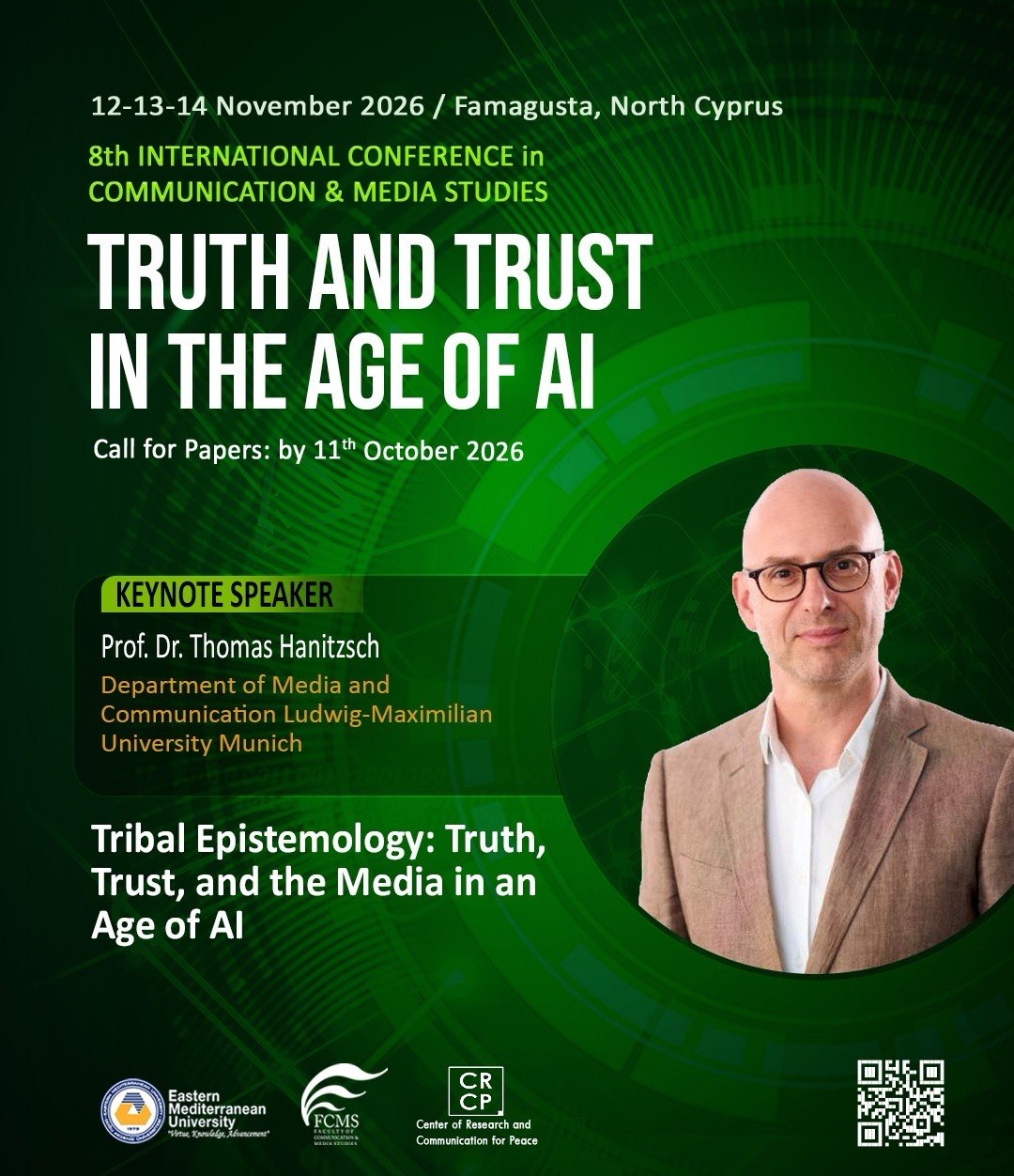
Prof. Dr. Thomas Hanitzsch is Professor of Communication in the Department of Media and Communication at LMU Munich, where he holds the Chair of Communication with a focus on journalism research. A former journalist, he teaches and conducts reseaonmine global journalism cultures, the transformation of journalism, comparative methodology, war coverage, mental health, and the changing professional conditions of journalists. He is an ICA Fellow and was President of the International Communication Association from 2025 to 2026.
Dr. Hanitzsch has played a prominent role in the international development of journalism studies as a field. He chaired the Journalism Studies sections of both the International Communication Association (ICA), from 2004 to 2006, and the European Communication Research and Education Association (ECREA), from 2010 to 2014. He also served as Editor-in-Chief of Communication Theory journal from 2011 to 2014.
His scholarly work is widely recognized for advancing comparative journalism research and for mapping how journalists across different political, cultural, and media systems understand their professional roles. He leads the Worlds of Journalism Study, a major multinational research project that regularly assesses journalists' professional views, working conditions, and the role of journalism in a changing world.
Among his most influential publications is Worlds of Journalism: Journalistic Cultures Around the Globe (Columbia University Press, 2019), a landmark comparative volume based on data from more than 27,500 journalists in 67 countries. The book analyzes how journalists around the world perceive their responsibilities, their relationship to society and government, and the meaning of their work.
Prof.Dr. Hanitzsch's academic profile reflects a sustained commitment to international, collaborative, and methodologically rigorous communication research. His work has contributed significantly to understanding journalism not as a single universal model, but as a set of diverse professional cultures shaped by local histories, institutions, political conditions, and global transformations. His research continues to inform debates on the future of journalism, media professionalism, public communication, and the role of journalists in democratic and rapidly changing societies.